
On this page
- What does the electrical for a tenant improvement involve?
- Whose responsibility is the electrical, the landlord’s or the tenant’s?
- Planning around the lease timeline
- Permits and inspections for commercial electrical
- Working in an occupied building
- Frequently asked questions
- Plan your fit-up electrical with us
The electrical is one of the parts of a commercial tenant improvement most worth planning early, because it touches the lighting, the outlets, the equipment circuits, and often the panel or service, and it sits on the critical path of the lease. Sorting out the scope, the permit, and the schedule up front is what keeps a fit-up on time and on budget.
A tenant improvement, or fit-up, is the work that turns a leased commercial space into one a business can actually operate in. The electrical side has a few moving parts that are easy to underestimate, so here is what to plan for when you are taking on a space in Winnipeg.
| Plan ahead for | Why it matters |
|---|---|
| Scope: base building versus fit-up | Knowing who provides what avoids gaps and surprise costs |
| The lease timeline | Electrical is on the critical path, and permits take lead time |
| Permit and inspection | Commercial electrical work needs a City permit and staged inspections |
| Working around operations | In an occupied building, shutdowns get scheduled around tenants |
| Equipment and future load | Dedicated circuits and panel capacity for the business’s real needs |
What does the electrical for a tenant improvement involve?
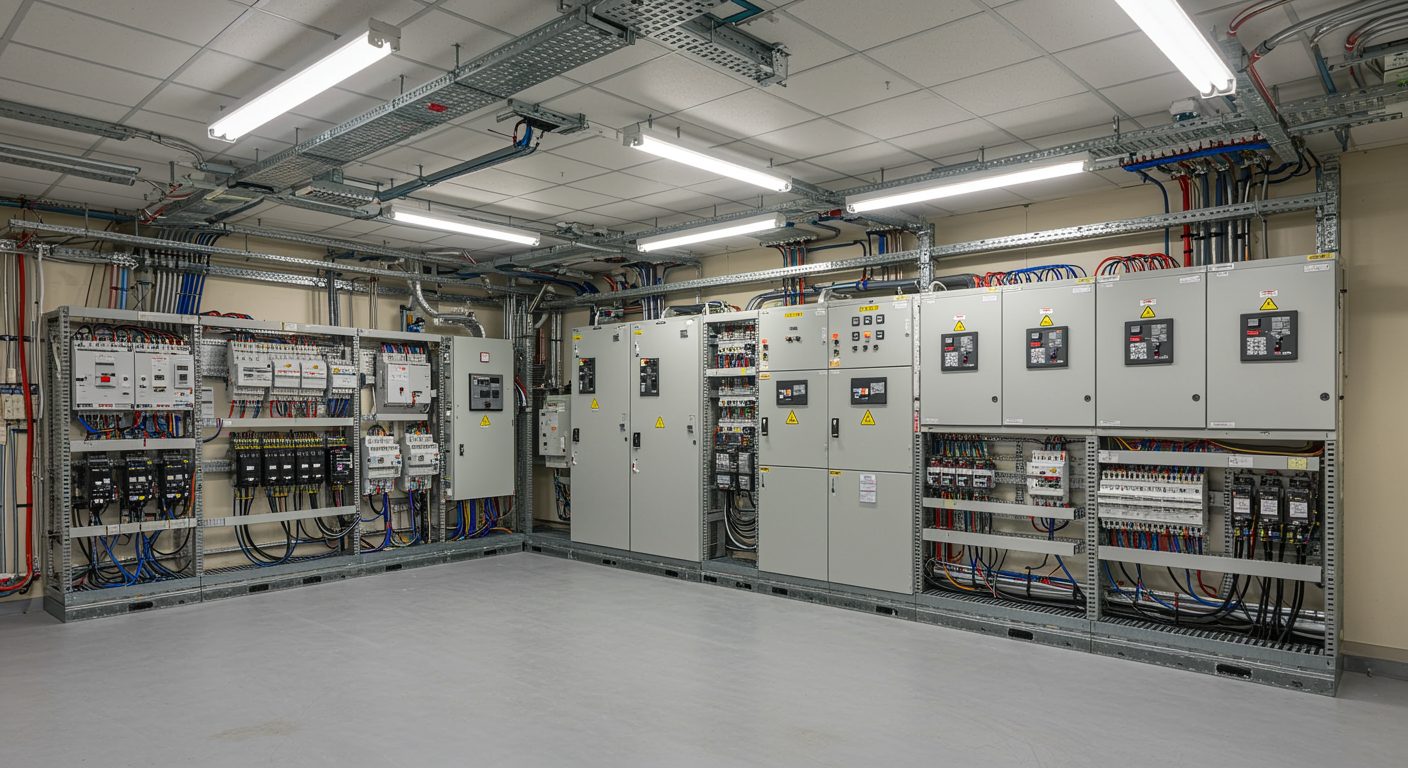
A fit-up’s electrical work covers everything from the lighting layout to the dedicated circuits a business needs to run. That usually means new lighting suited to the space, outlets where the work actually happens, dedicated circuits for equipment like kitchen appliances, machinery, or server gear, and sometimes a panel or service upgrade if the existing capacity does not cover the new use. Low-voltage work for data and security, and power for exterior signage, often come into the same scope.
How much of this a space needs depends entirely on the business going in. A professional office is mostly lighting and outlets, while a restaurant or a shop with equipment can be a heavy electrical job. The first step is matching the electrical to what the business will actually do in the space, which is the part worth getting right before any walls go up.
Whose responsibility is the electrical, the landlord’s or the tenant’s?
It depends on the lease, which is exactly why it is worth pinning down early. In most commercial arrangements the landlord provides the base building, which can include the main service and a basic panel, and the tenant pays for the fit-up that adapts the space to their business. Where the line falls between the two varies from one lease to the next, so a clear read on who provides the service capacity and who provides the fit-up wiring avoids a gap that nobody budgeted for.
This matters most around capacity. If the business needs more power than the base building provides, someone has to pay for the service or panel upgrade, and which party that is should be settled before the lease is signed. We can assess the existing service against the planned use so there are no surprises once the work starts.
Planning around the lease timeline
Electrical work sits on the critical path of a fit-up, so it has to be planned against the lease clock rather than squeezed in at the end. Permits take lead time, the rough-in wiring has to be done and inspected before the walls are closed and finished, and the work has to coordinate with the other trades on site. A tenant improvement that has a hard opening date lives or dies on this kind of sequencing.
The practical move is to bring the electrical scope into the planning early, alongside the general contractor and the design, so the permit is pulled in time and the rough-in lands in the right slot. We scope the electrical portion against the schedule and tell you honestly what is achievable in the window, which is more useful than finding out late that the timeline does not work.
Permits and inspections for commercial electrical
Commercial electrical work in Winnipeg needs an electrical permit and inspections, the same as any regulated electrical work, since by law all electrical wiring in Manitoba must be inspected. On a commercial fit-up those inspections happen in stages as the job progresses. The City of Winnipeg handles commercial electrical inspections, and the work is checked against the Manitoba Electrical Code from rough-in through final. Our guide on what an electrical inspection covers walks through how those stages work.
For a business, the value of doing this properly is the documentation as much as the safety. A landlord or an insurer will want to see that the electrical was permitted and inspected, and a clean set of records is part of what a commercial electrician hands over at the end of a job.
Working in an occupied building
Most tenant improvements happen in buildings where other businesses are open, so the electrical work has to be planned around them. A power shutdown to tie in a new panel or circuit affects more than your unit, so it gets scheduled with the landlord and the neighbouring tenants, and often done after hours, so nobody is caught off guard. This kind of coordination is what keeps a fit-up running smoothly in a shared building.
We do this work for businesses across the city, including the storefronts and offices around St. James and East Kildonan, and the planning around occupied space is as much a part of the job as the wiring itself. The work is scheduled so the disruption lands when it costs the building the least.
Frequently asked questions
Does a tenant improvement need an electrical permit?
Yes. Commercial electrical work in a tenant improvement needs a City of Winnipeg electrical permit and inspections, because it involves new or altered wiring that has to meet the Manitoba Electrical Code. The inspections happen in stages, from rough-in before the walls close to a final inspection, and a licensed contractor pulls the permit and books them.
Who is responsible for the electrical in a fit-up, the landlord or the tenant?
It depends on the lease. Typically the landlord provides the base building, which can include the main service and a basic panel, while the tenant pays for the fit-up that adapts the space to their business. Where the line sits varies by lease, so it is worth confirming who covers any service or panel upgrade before the lease is signed.
How long does the electrical for a fit-up take?
It depends on the size and complexity of the space, from a few days for a light office fit-up to several weeks for a restaurant or a space with heavy equipment. Because the electrical sits on the critical path, the bigger factor is sequencing it correctly against the permits and the lease deadline, which is why it is worth planning early.
Can the electrical work be done after hours?
Yes, and in an occupied building it often is. Work that requires a power shutdown or that would disrupt neighbouring businesses is commonly scheduled after hours or around the building’s quiet periods. Planning those windows with the landlord and tenants in advance is part of running a commercial job cleanly.
What electrical does a commercial space typically need?
Most commercial fit-ups need new lighting and outlets placed for how the space will be used, plus dedicated circuits for the equipment the business runs. Many also need data and low-voltage wiring and exterior signage power, plus sometimes a panel or service upgrade if the base building does not have the capacity. The exact scope comes down to the business and the space.
Plan your fit-up electrical with us
If you are taking on a commercial space, we can scope the electrical against your lease timeline, handle the permit and inspections, and plan the work around your building. Learn more about our commercial electrician services.
{ “@context”: “https://schema.org”, “@type”: “FAQPage”, “mainEntity”: [ { “@type”: “Question”, “name”: “Does a tenant improvement need an electrical permit?”, “acceptedAnswer”: { “@type”: “Answer”, “text”: “Yes. Commercial electrical work in a tenant improvement needs a City of Winnipeg electrical permit and inspections, because it involves new or altered wiring that has to meet the Manitoba Electrical Code. The inspections happen in stages, from rough-in before the walls close to a final inspection, and a licensed contractor pulls the permit and books them.” } }, { “@type”: “Question”, “name”: “Who is responsible for the electrical in a fit-up, the landlord or the tenant?”, “acceptedAnswer”: { “@type”: “Answer”, “text”: “It depends on the lease. Typically the landlord provides the base building, which can include the main service and a basic panel, while the tenant pays for the fit-up that adapts the space to their business. Where the line sits varies by lease, so it is worth confirming who covers any service or panel upgrade before the lease is signed.” } }, { “@type”: “Question”, “name”: “How long does the electrical for a fit-up take?”, “acceptedAnswer”: { “@type”: “Answer”, “text”: “It depends on the size and complexity of the space, from a few days for a light office fit-up to several weeks for a restaurant or a space with heavy equipment. Because the electrical sits on the critical path, the bigger factor is sequencing it correctly against the permits and the lease deadline, which is why it is worth planning early.” } }, { “@type”: “Question”, “name”: “Can the electrical work be done after hours?”, “acceptedAnswer”: { “@type”: “Answer”, “text”: “Yes, and in an occupied building it often is. Work that requires a power shutdown or that would disrupt neighbouring businesses is commonly scheduled after hours or around the building’s quiet periods. Planning those windows with the landlord and tenants in advance is part of running a commercial job cleanly.” } }, { “@type”: “Question”, “name”: “What electrical does a commercial space typically need?”, “acceptedAnswer”: { “@type”: “Answer”, “text”: “Most commercial fit-ups need new lighting and outlets placed for how the space will be used, plus dedicated circuits for the equipment the business runs. Many also need data and low-voltage wiring and exterior signage power, plus sometimes a panel or service upgrade if the base building does not have the capacity. The exact scope comes down to the business and the space.” } } ] }