
On this page
Yes, cold weather affects EV charging, and in a Winnipeg winter the effect is real. A cold battery charges more slowly because the car limits the charge rate to protect the cells, and your range drops by roughly 20 to 25 percent below freezing. The practical news is that a warm garage and a little planning cancel out most of it.
This is the most common winter worry we hear from Winnipeg EV owners, and it is manageable once you understand what the cold actually does. Here is what happens to charging and range in the cold, and how to set yourself up so a January morning is not a problem.
| Cold-weather effect | What happens | What helps |
|---|---|---|
| Slower charging | The car limits the charge rate while the battery is cold | Charge in a garage, and precondition the battery |
| Lower range | Range drops about 20 to 25 percent below freezing | Plan for it and keep the battery warm while plugged in |
| Energy spent on heating | Warming the cabin and battery uses charge | Precondition while the car is still plugged in |
Does cold weather affect EV charging?
Yes, cold weather slows how fast an EV charges and cuts how far it goes on a charge. The battery is essentially a chemical system, and like most chemistry it works more slowly when it is cold, so both releasing energy to drive and accepting energy to charge happen at a reduced pace below freezing. The University of Calgary puts the typical winter range loss at around 25 percent once temperatures drop below freezing, which lines up with what Winnipeg drivers see.
It is worth keeping this in perspective. Gas vehicles lose efficiency in the cold too, and EVs work perfectly well through a prairie winter once you account for the hit. The cold does not stop you from charging. It just means a cold battery charges slower and a cold drive uses more, both of which you can plan around.
Why does a cold battery charge slower?
A cold battery charges slower because the car deliberately limits the charge rate to protect it. Pushing a fast charge into very cold cells can damage them over time, so the battery management system holds the rate down until the battery warms into its ideal range, then lets the rate climb. That is why a charge that takes a few hours in summer can take longer on a deep-cold night, especially for the first stretch before the battery warms up.
This matters less for home charging than for fast charging on the road. A Level 2 home charger delivers power at a rate a cold battery can usually accept without much penalty, so the slowdown is most noticeable at a high-powered public fast charger, where the cold battery cannot take the full rate. For overnight charging in your own garage, the effect is modest.
How to charge an EV in a Winnipeg winter
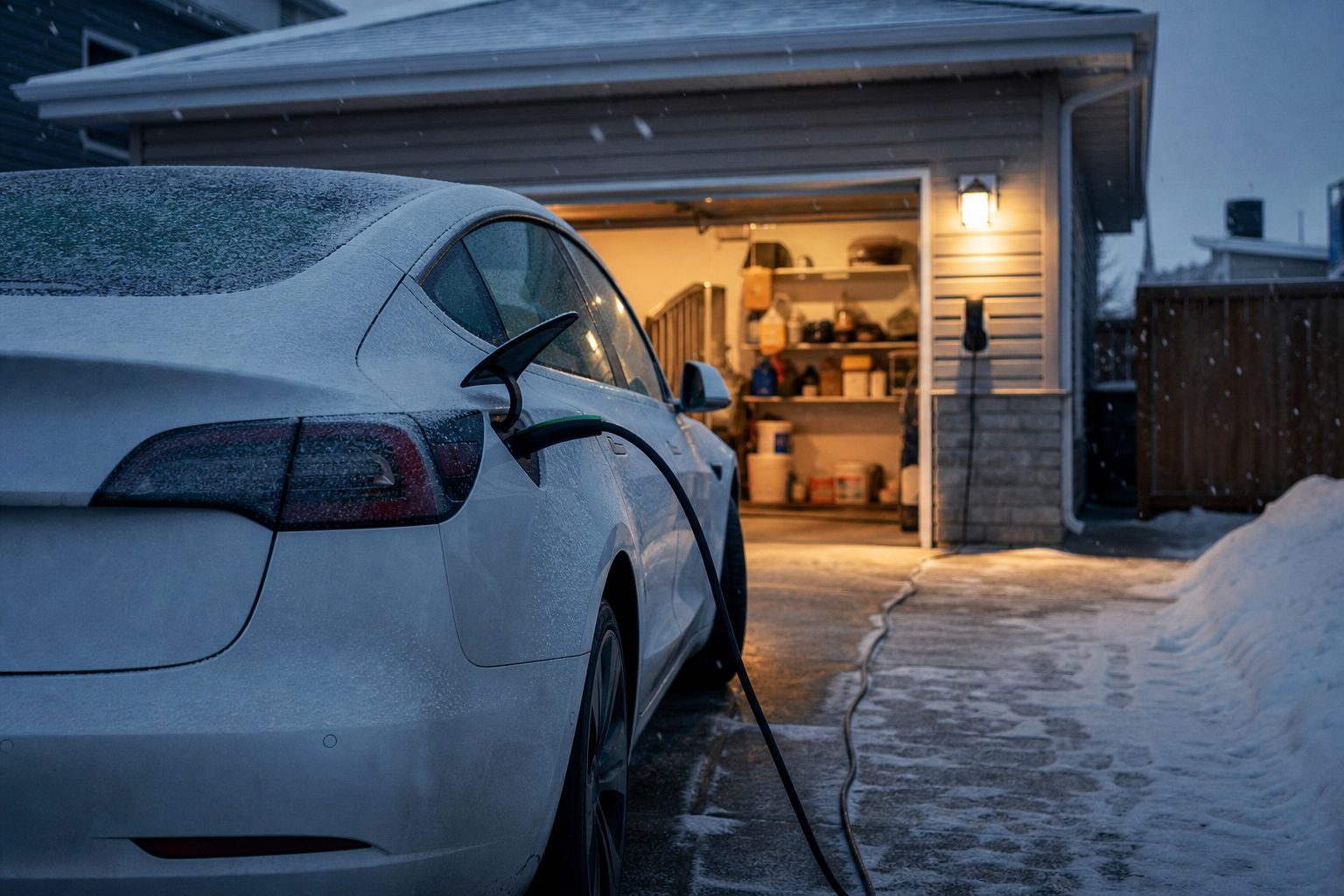
The single best thing you can do is charge in a garage. An attached or insulated garage keeps the battery well above the outdoor temperature, so it charges faster and starts the day warmer, which is one of the reasons home charging makes so much sense in this climate. If you charge in a detached garage, even an unheated one is warmer than the open air. A few habits do the rest:
- Precondition while plugged in. Most EVs let you warm the cabin and battery on a schedule before you leave, and doing it while still connected draws that energy from the charger, so it does not eat into your range.
- Leave it plugged in. Staying connected lets the car keep the battery at a healthy temperature overnight, so it is ready in the morning.
- Keep the port clear. Brush snow and ice off the charge port and connector before plugging in, and do not force a frozen connector.
Done together, these turn the cold from a daily frustration into a non-event. You plug in when you get home, the car manages its own temperature overnight, and you precondition before you unplug in the morning.
Does the cold change whether you need Level 2?
If anything, a Winnipeg winter makes the case for Level 2 stronger. A slow Level 1 charge that barely keeps up in summer falls further behind once cold weather adds its own losses, so the overnight headroom a Level 2 charger gives you matters more here than in a mild climate. Our guide on Level 1 versus Level 2 charging makes that case in full, and for what an install runs, our EV charger cost guide covers it. According to Natural Resources Canada, a Level 2 charger runs on the same kind of 240-volt circuit as a dryer, which is the setup most Winnipeg homes end up with.
Frequently asked questions
Does cold weather affect EV charging?
Yes. Cold weather slows how quickly an EV charges and reduces its range, because the battery’s chemistry works more slowly when it is cold. Below freezing, range typically drops around 20 to 25 percent, and a cold battery accepts a charge at a lower rate until it warms up. Charging in a garage and preconditioning the battery both reduce the effect.
How much range does an EV lose in winter?
An EV typically loses roughly 20 to 25 percent of its range below freezing, with the loss deeper in extreme cold. The energy goes into heating the cabin and the battery and into the slower chemistry of a cold pack. Planning for the reduced range, and preconditioning the car while it is still plugged in, keeps it from being a problem on a Winnipeg winter day.
Why does my EV charge slower in the cold?
Your EV charges slower in the cold because the car limits the charge rate to protect a cold battery from damage. The battery management system holds the rate down until the pack warms into its ideal range, then allows it to climb. The slowdown is most noticeable at a high-powered public fast charger and least noticeable on an overnight Level 2 charge at home.
Should I leave my EV plugged in in winter?
Yes, leaving an EV plugged in overnight in winter is a good idea. Staying connected lets the car keep the battery at a healthy temperature and preconditions it for the morning using power from the charger rather than the battery. It also means you wake up to a full charge and a warm cabin without drawing down range to get there.
Does charging in a garage help in winter?
Yes, charging in a garage is the most effective thing you can do in a Winnipeg winter. A garage keeps the battery warmer than the open air, so it charges faster and holds more usable range. An attached or insulated garage is best, but even an unheated detached garage is warmer than charging outdoors in the cold.
Set up for winter charging
If you want home charging that holds up through a Winnipeg winter, we can install a Level 2 charger in your garage and set it up for the cold. Learn more about our EV charger installation service.
{ “@context”: “https://schema.org”, “@type”: “FAQPage”, “mainEntity”: [ { “@type”: “Question”, “name”: “Does cold weather affect EV charging?”, “acceptedAnswer”: { “@type”: “Answer”, “text”: “Yes. Cold weather slows how quickly an EV charges and reduces its range, because the battery’s chemistry works more slowly when it is cold. Below freezing, range typically drops around 20 to 25 percent, and a cold battery accepts a charge at a lower rate until it warms up. Charging in a garage and preconditioning the battery both reduce the effect.” } }, { “@type”: “Question”, “name”: “How much range does an EV lose in winter?”, “acceptedAnswer”: { “@type”: “Answer”, “text”: “An EV typically loses roughly 20 to 25 percent of its range below freezing, with the loss deeper in extreme cold. The energy goes into heating the cabin and the battery and into the slower chemistry of a cold pack. Planning for the reduced range, and preconditioning the car while it is still plugged in, keeps it from being a problem on a Winnipeg winter day.” } }, { “@type”: “Question”, “name”: “Why does my EV charge slower in the cold?”, “acceptedAnswer”: { “@type”: “Answer”, “text”: “Your EV charges slower in the cold because the car limits the charge rate to protect a cold battery from damage. The battery management system holds the rate down until the pack warms into its ideal range, then allows it to climb. The slowdown is most noticeable at a high-powered public fast charger and least noticeable on an overnight Level 2 charge at home.” } }, { “@type”: “Question”, “name”: “Should I leave my EV plugged in in winter?”, “acceptedAnswer”: { “@type”: “Answer”, “text”: “Yes, leaving an EV plugged in overnight in winter is a good idea. Staying connected lets the car keep the battery at a healthy temperature and preconditions it for the morning using power from the charger rather than the battery. It also means you wake up to a full charge and a warm cabin without drawing down range to get there.” } }, { “@type”: “Question”, “name”: “Does charging in a garage help in winter?”, “acceptedAnswer”: { “@type”: “Answer”, “text”: “Yes, charging in a garage is the most effective thing you can do in a Winnipeg winter. A garage keeps the battery warmer than the open air, so it charges faster and holds more usable range. An attached or insulated garage is best, but even an unheated detached garage is warmer than charging outdoors in the cold.” } } ] }