
On this page
Before you buy an older Winnipeg home, the electrical is one of the first things worth checking, because it affects your safety, your insurance, and your budget after closing. The big items are the wiring type, the panel and its capacity, the grounding, and the smoke and carbon monoxide alarms. An electrical inspection is what ties them all together into a clear picture.
Winnipeg has a deep stock of older homes, from pre-war character houses to 1960s and 70s suburbs, and each era brings its own electrical quirks. This checklist walks through what to look for, with links to the detail on each item so you can dig in where it matters for the home you are considering.
| Check | What to look for | Why it matters |
|---|---|---|
| Wiring type | Knob and tube or aluminum wiring | Safety and insurance |
| The panel | A 60-amp service, a fuse box, a full panel, or a hazard brand | Capacity and safety |
| Grounding | Two-prong, ungrounded outlets | Modern electronics need a ground |
| Alarms | Smoke and CO alarms present and current | Required, and a safety basic |
| Warning signs | Flickering lights, warm outlets, tripping breakers | Clues to a deeper problem |
Check the wiring type
The wiring is the biggest single item, because the two older types carry real safety and insurance weight. Homes built before about 1950 may still have knob and tube wiring, which has no ground and is something many insurers will not cover. Homes from the mid-1960s to the late 1970s may have aluminum branch wiring, which is safe when its connections are sound but can loosen and overheat over the decades.
Both are manageable, and neither is automatically a reason to walk away, but you want to know which one you are looking at before you commit. Our guides on the signs of knob and tube and aluminum wiring risks show you how to spot each, and our guides on knob and tube and insurance and aluminum wiring and insurance cover what they mean for coverage.
Check the panel
The panel tells you a lot about whether the home can handle modern life. A 60-amp service or a fuse box is a sign the home is running on an electrical setup from another era, often too small for how people use power now, and frequently an insurance issue on its own, since insurers flag older services as high-risk, as the trade publication Canadian Underwriter notes. A panel that is physically full, or one from a brand with a known safety history like the failure-prone units documented by InspectAPedia, is also worth flagging.
If the panel needs attention, that ranges from a straightforward upgrade to a larger job. Our guide on the signs your panel needs an upgrade covers what to watch for, and our guide on 100 amp versus 200 amp service explains what capacity a Winnipeg home actually needs.
Check the grounding and protection
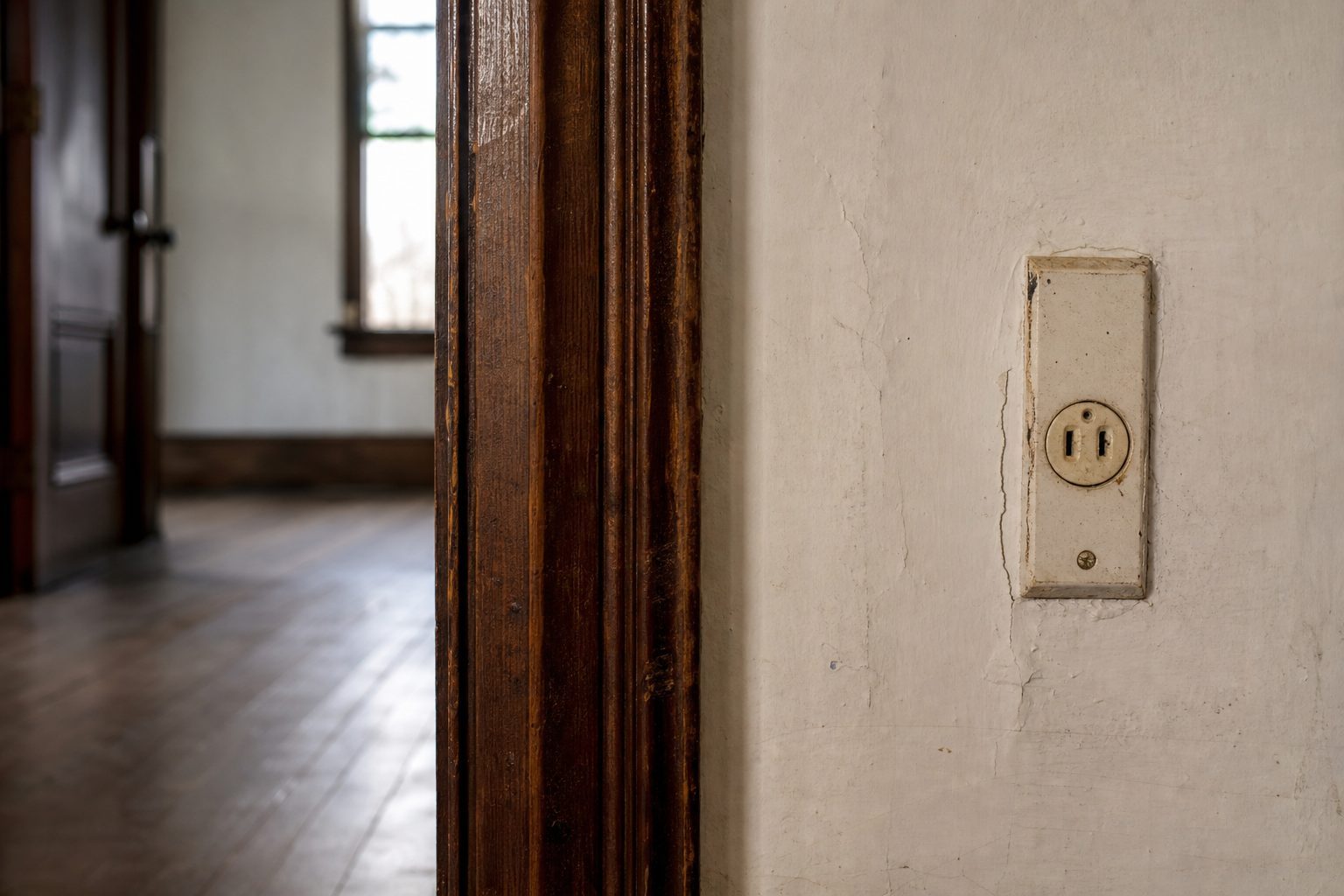
Two-prong outlets throughout a home are a tell that the wiring is ungrounded, which matters because nearly every modern appliance and electronic device expects a grounded, three-prong outlet. Ungrounded wiring is common in homes with knob and tube, and it limits what you can safely plug in. While you are at it, look for ground-fault protected outlets in the kitchen, bathrooms, and any outdoor spots, since those are required and are a quick tell about whether the home has seen any modern electrical updates.
Check the smoke and CO alarms
Smoke and carbon monoxide alarms are easy to check and easy to fix, but worth confirming on an older home. Manitoba requires a smoke alarm in every bedroom and on every level, and a carbon monoxide alarm where there is a fuel-burning appliance or an attached garage, which our guide on smoke and CO detector requirements lays out. On an older home with a gas furnace, working alarms are not a nice-to-have, they are a basic.
Watch for the warning signs
A walk-through turns up plenty of clues if you know what to notice. Flickering or dimming lights, outlets or switch plates that feel warm, a breaker that trips during a normal viewing, a buzzing sound from a panel or outlet, or any smell of burning are all worth asking about. Our guide on why a breaker keeps tripping explains what those symptoms can mean. None of them is necessarily a dealbreaker, but each is a reason to look closer before you sign.
Get an electrical inspection before you commit
The single most useful step is a proper electrical inspection by a licensed electrician, which pulls every item on this list into one clear assessment. An inspection tells you whether the home is sound or whether you are taking on a rewire, and it is exactly what an insurer will want on an older home, and what the Electrical Safety Authority recommends, as our guide on what an electrical inspection covers explains. If a rewire is on the table, our cost to rewire a house guide covers the budget side.
We do these assessments across Winnipeg’s older neighbourhoods, from the character homes of Wolseley and River Heights to the established streets of Crescentwood, where buyers want a straight read before they commit. You come away knowing what is sound and what will need work, which is the information that lets you make an offer with your eyes open.
Frequently asked questions
What electrical problems are common in older Winnipeg homes?
The common ones are knob and tube or aluminum wiring, an undersized 60-amp service or a fuse box, ungrounded two-prong outlets, and missing or outdated grounding and protection. Older homes also tend to have too few outlets for modern use. Most are fixable, but they affect your safety and what the home will cost you after you buy it.
Should I get an electrical inspection before buying an older home?
Yes, on an older home it is strongly worth it. An electrical inspection by a licensed electrician tells you whether the wiring and panel are sound or whether the home needs work like a rewire or a panel upgrade. That information can shape your offer and your insurance, and it is far cheaper to know before closing than to discover after.
Is knob and tube or aluminum wiring a dealbreaker?
Not usually, but it is something to price in. Knob and tube often needs to be removed for insurance, while aluminum wiring can frequently be made safe by remediating the connections rather than a full rewire. Knowing which the home has, and what fixing it costs, lets you factor it into the price you offer.
Will an older home’s electrical affect my insurance?
Often, yes. Many insurers treat knob and tube, aluminum wiring, and a 60-amp service as higher risk, and some will not write or renew a policy until the wiring is assessed or upgraded. An electrician’s inspection report, and documentation of any work done, is what brings an older home back to insurable on normal terms.
How much does it cost to update an older home’s electrical?
It depends on what the home needs, from a few hundred dollars for added outlets or alarms to several thousand for a rewire or a service upgrade. A full rewire in Winnipeg typically runs from about $7,000 for a small home to $25,000 or more for a larger or older one. An inspection is what turns the unknowns into a real number you can budget for.
Know what you are buying
If you are considering an older Winnipeg home, we will inspect the electrical and give you a clear, honest read before you commit. Learn more about our electrical inspection service.
{ “@context”: “https://schema.org”, “@type”: “FAQPage”, “mainEntity”: [ { “@type”: “Question”, “name”: “What electrical problems are common in older Winnipeg homes?”, “acceptedAnswer”: { “@type”: “Answer”, “text”: “The common ones are knob and tube or aluminum wiring, an undersized 60-amp service or a fuse box, ungrounded two-prong outlets, and missing or outdated grounding and protection. Older homes also tend to have too few outlets for modern use. Most are fixable, but they affect your safety and what the home will cost you after you buy it.” } }, { “@type”: “Question”, “name”: “Should I get an electrical inspection before buying an older home?”, “acceptedAnswer”: { “@type”: “Answer”, “text”: “Yes, on an older home it is strongly worth it. An electrical inspection by a licensed electrician tells you whether the wiring and panel are sound or whether the home needs work like a rewire or a panel upgrade. That information can shape your offer and your insurance, and it is far cheaper to know before closing than to discover after.” } }, { “@type”: “Question”, “name”: “Is knob and tube or aluminum wiring a dealbreaker?”, “acceptedAnswer”: { “@type”: “Answer”, “text”: “Not usually, but it is something to price in. Knob and tube often needs to be removed for insurance, while aluminum wiring can frequently be made safe by remediating the connections rather than a full rewire. Knowing which the home has, and what fixing it costs, lets you factor it into the price you offer.” } }, { “@type”: “Question”, “name”: “Will an older home’s electrical affect my insurance?”, “acceptedAnswer”: { “@type”: “Answer”, “text”: “Often, yes. Many insurers treat knob and tube, aluminum wiring, and a 60-amp service as higher risk, and some will not write or renew a policy until the wiring is assessed or upgraded. An electrician’s inspection report, and documentation of any work done, is what brings an older home back to insurable on normal terms.” } }, { “@type”: “Question”, “name”: “How much does it cost to update an older home’s electrical?”, “acceptedAnswer”: { “@type”: “Answer”, “text”: “It depends on what the home needs, from a few hundred dollars for added outlets or alarms to several thousand for a rewire or a service upgrade. A full rewire in Winnipeg typically runs from about $7,000 for a small home to $25,000 or more for a larger or older one. An inspection is what turns the unknowns into a real number you can budget for.” } } ] }